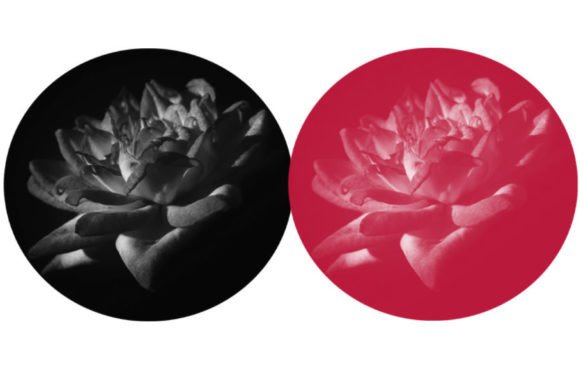
Understanding Brush 53: A Practical Guide to Digital Texture and Application
In the expansive world of digital art, the sheer volume of available tools can often overshadow the importance of mastering individual assets. Brush 53 represents a specific type of digital instrument designed for texture, depth, and organic variation. Unlike generic round or square brushes that serve as foundational tools for blocking in shapes, specialized brushes like this are engineered to solve specific artistic problems. Whether you are working in Photoshop, Procreate, or another raster-based program, understanding the nuances of a single, well-crafted brush can significantly elevate your workflow.
This article explores what makes Brush 53 distinct, how it fits into a broader toolkit, and when it serves as the optimal choice compared to other alternatives. By evaluating its strengths and limitations, artists can make informed decisions about integrating it into their creative process.
Defining the Characteristics of Brush 53
At its core, Brush 53 is not merely a stamp; it is a dynamic tool configured with specific parameters regarding opacity, flow, scatter, and texture mapping. While the exact behavior depends on the software engine, brushes in this category typically focus on mimicking natural media or creating complex surface details that would be time-consuming to paint manually.
The primary distinction of Brush 53 lies in its ability to introduce controlled randomness. Standard brushes often produce uniform strokes, which can result in artwork that feels sterile or digitally perfect. In contrast, Brush 53 introduces subtle variations in edge hardness and pigment distribution. This characteristic is particularly valuable for artists seeking to break up flat colors and add visual interest without resorting to heavy-handed texturing techniques.
When you acquire a resource labeled as "Brush 53," you are typically receiving a highly tuned preset. The accompanying ZIP file usually contains either a .brushes file for direct installation or .swatches for color-integrated workflows. Having just one brush in the set suggests a focus on quality over quantity. Instead of sifting through hundreds of mediocre options, the user receives a refined tool that has been tested for consistency and reliability.
Comparative Analysis: Specialized Tools vs. Generalist Brushes
To understand the value of Brush 53, it is helpful to compare it with generalist alternatives. Most digital artists begin with a standard hard-round or soft-round brush. These are indispensable for sketching and base coloring, but they lack the inherent complexity required for final rendering stages.
- Generalist Brushes: Offer maximum control and predictability. They are ideal for precise line work and smooth gradients but require significant manual effort to create texture.
- Texture Packs: Often contain dozens of brushes meant for specific surfaces like wood, metal, or skin. While versatile, these packs can clutter the interface and lead to decision paralysis.
- Brush 53: Sits between these two extremes. It provides more character than a standard round brush but remains versatile enough to be used across various subjects, from landscape foliage to character clothing textures.
The tradeoff here is specificity versus flexibility. A highly specialized brush might excel at painting pine trees but fail miserably when applied to water. Brush 53 is designed to be adaptable. Its strength lies in its mid-range complexity, allowing it to function as a workhorse for detailing rather than a niche novelty.
Evaluating Fit: When to Use Brush 53
Determining whether Brush 53 is the right tool for your current project requires an assessment of your artistic goals. This brush shines in scenarios where organic imperfection is desired. For example, when painting environmental concepts, using Brush 53 can quickly establish the illusion of dense vegetation or rough terrain. The built-in variance allows for rapid coverage while maintaining a hand-painted aesthetic.
However, there are situations where Brush 53 may not be the best choice. If your project demands crisp, vector-like precision or ultra-smooth gradients, the textured nature of this brush could introduce unwanted noise. In such cases, sticking to standard geometric brushes or using blur tools alongside them would yield cleaner results.
Consider the following practical examples:
- Character Design: Use Brush 53 to add fabric texture to clothing or stubble to a face. It adds realism without requiring photobashing.
- Backgrounds: Ideal for blocking in distant forests or rocky outcrops where fine detail is less critical than overall shape and tone.
- Abstract Art: The unpredictable stroke pattern can serve as a starting point for compositional ideas, offering happy accidents that spark creativity.
Technical Considerations and Workflow Integration
Integrating a new brush into your workflow involves more than just installation. Understanding the technical underpinnings of Brush 53 ensures you get the most out of it. Since the download includes a single brush file, the setup process is straightforward. Users simply need to import the .brushes or .swatches file into their preferred software library.
One common misconception is that a specialized brush eliminates the need for skill. In reality, Brush 53 amplifies the user’s input. Pressure sensitivity settings play a crucial role in how the brush behaves. Artists who utilize tablet pressure effectively will find that Brush 53 responds dynamically, producing lighter, scattered marks with gentle touches and denser, more opaque strokes with firm pressure.
It is also important to consider layer management. Because Brush 53 adds texture, it can quickly become overwhelming if applied on a single layer at full opacity. A best practice is to use multiple layers with reduced opacity, building up the effect gradually. This approach maintains control and allows for non-destructive editing, a key principle in professional digital painting.
Limitations and Alternative Approaches
No tool is universally perfect. While Brush 53 offers significant advantages in terms of speed and organic feel, it has limitations. One potential drawback is repetition. If used extensively without variation in angle, size, or color, the pattern of the brush can become noticeable, breaking the illusion of realism. To mitigate this, artists should rotate the canvas frequently and vary the brush size dynamically.
Furthermore, for artists who prefer a completely clean, minimalist style, the inherent grit of Brush 53 might be counterproductive. In these instances, alternative approaches such as using gradient maps or custom-shaped masks might provide the desired aesthetic with greater precision.
Another factor to consider is resolution dependency. Like all raster brushes, the quality of Brush 53 is tied to the canvas resolution. Using it on a low-resolution document may result in pixelation or loss of detail. Ensuring your workspace is set to an appropriate DPI (dots per inch) is essential for maintaining the integrity of the brush’s texture.
Making an Informed Decision
Choosing whether to incorporate Brush 53 into your arsenal depends on your specific needs and existing toolkit. If you already possess a vast library of texture brushes, evaluate whether Brush 53 offers something unique—such as a specific edge quality or scattering algorithm—that your current tools lack. If your current brushes feel too uniform or require excessive manual tweaking to achieve natural results, Brush 53 could be the efficient solution you need.
For beginners, starting with a single, high-quality brush like this can be more educational than downloading massive packs. It forces you to learn the capabilities of one tool deeply, fostering a better understanding of how digital brushes interact with canvas and pressure. For professionals, it serves as a reliable shortcut for repetitive tasks, freeing up mental energy for higher-level compositional decisions.
Ultimately, the value of Brush 53 lies in its balance. It is not a magic wand, but a refined instrument that, when used with intention, can enhance the depth and authenticity of digital artwork. By recognizing its strengths in organic texture and its limitations in precision, artists can deploy it strategically to improve both their workflow efficiency and final output quality.